
WASHINGTON – Most of this storyisn't fit for a family newspaper.
The country's political discourse has deteriorated to the point – or become so robust – that the presidentcan drop an f-bomband getone lobbed back in return. Of course, caustic rhetoric is as old as the country. A vice president once killed a former Cabinet member in a duel. A House member beat another lawmaker unconscious in the Senate chamber.
Butthreats against public figures have spiked in recent yearsand occasionally erupt inhigh-profile flashes of violencesuch as theCapitol attack on Jan. 6, 2021, or the assassination ofconservative organizer Charlie Kirk. Social media spreads antagonistic messages that might have circulated privately in past decades across a polarized society immediately – everywhere. The trend is worrisome for some politics watchers because weapons are readily available when voters get riled by their leaders and disputes go beyond harsh words.
"Political violence and heated rhetoric have been present throughout our nation's history," Gabrielle Giffords, who retired from the House after being shot in the head in January 2011, told USA TODAY. "However, we are at a uniquely dangerous point: Extreme rhetoric can be used to radicalize people online, and dangerous weapons are more accessible than ever before."
An unlikely remedy would require public figures to rein themselves in.
Mitch Daniels, a former Indiana governor and director of the White House Office of Management and Budget, said politicians understand their profession "ain't beanbag" but "a full-contact sport." But he said candidates could demonstrate the self-control necessary to govern by renouncing vulgar language and the vilification of rivals as destructive and corrosive.
"Imagine someone who runs – most notably for president, but this could happen at other significant levels – who says, 'Enough,'" Daniels told USA TODAY. "There's a lot of dice loaded against it."

Trump drops f-bombs, and others are following suit
Some lawmakers are worried because the most offensive language about procreation and defecation has emerged from the shadows and into everyday discourse.
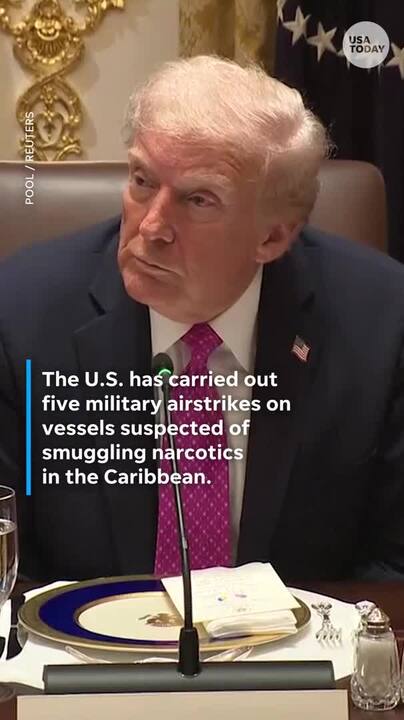
President Donald Trumpdrops f-bombs without even getting worked up. Like anative New Yorker in a crosswalk, Trump is accustomed to brash language like urging congressional Republicans not to "f--- around with Medicaid"during budget talks in May 2025. He said Iran and Israel "don't know what the f--- they're doing" as hetalked about their ceasefire in June 2025. And he said Venezuela's President Nicolas Maduro didn't want to "f--- around with the United States"in October 2025– before the U.S. military captured him in January to face federal charges in New York.
Trump has more than a one-word vocabulary. He called former PresidentJoe Biden's executive order on immigration "bull----" ata June 2024 campaign rally, which prompted the Nevada crowd to chant the word.Trump told his CabinetDec. 2, 2025, that "we're taking those son-of-a-b------ out," in reference to drug traffickers.
Trump went so far as to say his rivals don't know how to swear.
"They want to imitate me and they start using foul language, but they use too much of it," Trump said during a White Houseroundtable on homeland security on Oct. 23, 2025. "You can't use the f-word seven times in one sentence. It doesn't work. It might work once every seven news conferences, but you can't do it seven times in one sentence."

Partisans fight fire of profanity with profanity
Harsh language isn't partisan. Foreign and domestic leaders have begun trading profane barbs with Trump and others.
"I think these people think it makes them look tough. It doesn't," Daniels said. "Once that horse is out of the barn, I don't know if you ever get it back."

A Danish member of the European Parliament, Anders Vistisen,told Trump to "f--- off" in January2025 over his demands for Greenland. The parliament's vice president, Nicolae Stefanuta, immediately scolded Vistisen for the term and said it was "not OK in this house of democracy."
House Minority Leader Hakeem Jeffries, D-New York, said "f---Donald Trumpand his vile, racist and malignant behavior" ina social media post Feb. 6. The post came afterTrump posted a video– which he later took down – portraying former President Barack Obama and his wife Michelle as apes.
California Gov. Gavin Newsomtold the Louisiana attorney generalto "go f--- yourself" on social media on Feb. 5 over the threat of a lawsuit dealing with abortion.
Sen. Chuck Schumer, D-New York,said on social media Dec. 24, 2025, that "The Trump administration is full of s---" about releasing documents related to accused sex trafficker Jeffrey Epstein. Schumer called Trump "a total j------"on social media on Dec. 15, 2025, after the president posted about Rob Reiner's murder. And Schumertold MSNOW on Dec. 3, 2025, that Trump "is in such an effing bubble that he doesn't even know what average people go through."

F-bombs emerged from the shadows into prime-time
Even as language became more caustic, it often remained muted until recent years.
Former President Richard Nixon proved himself no slouch in the vulgarity department after reaching the White House in 1969. But in private.
"Nixon, if you listen to the tapes, he was f-bombing more than he was bombing Cambodia," Jeremy Mayer, a professor in the Schar School of Policy and Government at George Mason University, told USA TODAY.
In June 2004, GOP Vice President DickCheney told Sen. Patrick Leahy, D-Vermont, a critic of the Iraq war, on the Senate floor to "go f--- yourself."
And in 2010, Democratic Vice President JoeBiden was caught on a hot mic calling Obamacare"a big f------ deal."
Biden's critics adopted the slogan"Let's go, Brandon" on T-shirts and ball caps as a way to direct profanity in a subtle way at the president. The phrase began as a chant at a 2021 NASCAR race, where a reporter misinterpreted both the verb and the name addressed to Biden.

Vilifying messages can startle without profanity.
Verbal jousting can become provocative in startling ways, even without being profane.
Former President Harry Trumangot into troublecampaigning for fellow Democrat John F. Kennedy in the 1960 campaign when he told a Texas audience that "damn" farmers "ought to go to hell" if they voted for Nixon. Kennedy demurred when asked at a televised debate whether he owed Nixon an apology.
"I really don't think there's anything that I could say to President Truman that's going to cause him, at the age of 76, to change his particular speaking manner,"Kennedy said.
Rep. Joe Wilson, R-South Carolina, breached decorum when heblurted out "you lie" when Obamaaddressed Congress on Sept. 9, 2009, about his health care proposal.
More:Polls find Americans worried about political violence after Charlie Kirk's assassination
Supreme Court JusticeSamuel Alito caused a stir when he mouthed "not true"during Obama's 2010 State of the Union speech. Obama had said the high court opened the door to a flood of special interest money in politics in the Citizens United case a week earlier.
When Trump addressed Congresson March 4, 2025, Democrats held up signs such as "False" in response to the speech. Rep. Melanie Stansbury, D-New Mexico, had a sign that said "This is not normal" ripped out of her hands and thrown by Rep. Lance Gooden, R-Texas.
At one point during the speech, Rep. Al Green, D-Texas, stood and yelled, "You don't have a mandate." House SpeakerMike Johnson, R-Louisiana,ordered him removed.

'A huge screaming alarm that Congress is broken'
AHouse Judiciary Committee hearing Feb. 11with Attorney GeneralPam Bondirevealed how nasty the jousting has become. She and lawmakers exchanged full-throated insults without delivering – or waiting for – answers about how the Justice Department is running.
Advertisement
The top Democrat, Rep. Jamie Raskin of Maryland, said Bondi released Epstein records "with some mixture of staggering incompetence, cold indifference and jaded cruelty toward more than 1,000 victims raped, abused and trafficked."
Bondi, who consulted a notebook of responses tailored to each lawmaker, called the Harvard Law graduate and 25-year professor of constitutional law a "washed-up loser lawyer."
"What we saw in that hearing is a huge, screaming alarm bell that Congress is broken," said Mayer, the politics professor. "They can't even do oversight."

Threats against Congress spike as violence occasionally erupts
Long-simmering political disputes boiled over in recent years.
Thousands of people riotedJan. 6, 2021, at the U.S. Capitol on behalf of Trump. Hundreds of people battled police in what witnesses described as medieval warfare that left 140 officers injured. Vice PresidentMike Pencewaschased from the Senate chamberby a mob that chanted they wanted to hang him.
Pipe bombs were foundoutside the Republican and Democratic party headquarters, and a suspect has been arrested.
Trump pardoned about 1,600 peoplewho had been charged in the attack by arguing their prosecutions were politically motivated.
More:Man who allegedly ran toward US Capitol with loaded shotgun arrested
Threats against members of Congress spiked in 2025to 14,938, according to U.S. Capitol Police. The previous peak of threats was 9,625 in 2021. An18-year-old Georgia man was charged Feb. 17with running toward the Capitol with a loaded shotgun.
Scores of lawmakers are leaving Congress, although the total is far from the previous record of 150 freshmen in 1933 and falls short of other tumultuous years since then. So far,54 House members are retiring or seeking other offices, while nine have already resigned or died. Seven senators are retiring and one left for another job.
Judges are also under siege. Supreme Court Chief Justice John Robertsnoted in December 2024"a significant uptick in identified threats" against all levels of the judiciary. Hostile communications tripled in the past decade and the U.S. Marshals Service investigated more than 1,000 serious threats against judges in the previous five years, he said.

Immigration contentious since the country's founding
Immigration − how much to allow and how strictly to limit new arrivals − has remained a flashpoint for the most abrasive language and fatal consequences for hundreds of years. Trump has made border security and tougher enforcement of immigration laws a centerpiece of his domestic policy.
"Things are awful but they've been awful many times throughout American history," Allan Lichtman, a history professor at American University, told USA TODAY. "On the one hand, America is this diverse melting pot, a tolerant, free, democratic nation. On the other hand, it is a country marked by xenophobia, racism, slavery, Jim Crow, misogyny, white supremacist beliefs, genocide against Native Americans."
When Trumpdeclared his first presidential candidacy in June 2015, he said the country had become "a dumping ground" for undesirable foreigners, with Mexican immigrants bringing "drugs" and "crime," and being "rapists." He won. As hecampaigned in Michigan in 2024 to return to the White House, Trump called immigrants without legal authority to be in the country "not humans. They're animals."
More:Made-for-TV presidency: How Trump's celebrity past shaped his first 100 days
Trump toughened border security and is overseeing the largest deportation program in history during his second term.He told the United Nations General Assemblyin September 2025 that countries with generous asylum policies were "going to hell." He paused immigration from Afghanistan, Haiti and Somalia, which he called "s------- countries"during a December 2025 speechin Pennsylvania.
But his goals weren't unprecedented. Trump revived the1798 Alien Enemies Actto make deportations easier for targeted groups he had declared terrorists. Other historic laws set strict limits on immigration, including the 1882 Chinese Exclusion Act and the 1924 Immigration Act, which set national quotas. A labor appropriations bill that yearcreated the Border Patrolatthe center of protestsandfatal shootings a century later.
"That's why I call Trump the culmination of these trends, not something that is unique and outside of America," said Lichtman, the historian who wrote "Conservative at the Core: A New History of American Conservatism." "It's not as if he's some aberration in the long history of this country."

Harsh words occasionally lead to shots, fights
Political disputes have occasionally led to spasms of violence.
On July 11, 1804, Vice President AaronBurr fatally shot his longtime political rival, former Treasury Secretary Alexander Hamilton, in a duel.
Tensions ran high in the decade before the Civil War.On May 22, 1856, Rep. Preston Brooks, D-South Carolina, walked into the Senate chamber and used his cane to beat unconscious the abolitionist Sen. Charles Sumner, a Massachusetts member of the Free Soil Party.
More recently, Trump survived two assassination attempts while campaigning to return to the White House. He wasshot in the ear on July 13, 2024, in Butler, Pennsylvania. Anda gunman waited for him Sept. 15, 2024, while he played golf at his court in Palm Beach, Florida.
More about political violence.Charlie Kirk murder the latest in political violence plaguing Trump, Congress and courts
A gunman was charged in June 2025 with stalking and murderingMinnesotastate House Speaker Emerita Melissa Hortman and her husband, and with stalking and shooting state Sen. John Hoffman and his wife.
"These were targeted political assassinations the likes of which have never been seen in Minnesota," said Joe Thompson, the acting U.S. attorney for the state.
Charlie Kirk, a conservative advocate who founded Turning Point USA, wasshot to death Sept. 10, 2025,at a Utah university while discussing gun control with a member of the audience.
"While there is no doubt the rhetoric needs to be turned down, that's not enough," said Giffords, the former House member who leads an eponymous advocacy group against gun violence. "I'm a gun owner myself, and know that responsible gun ownership is a part of American life. But resolving our differences through violence shouldn't be."

People still believe in 'decency, courtesy, kindness': Obama
Periods of vitriol and violence ebb and flow, but historians say they tend to end either through greater prosperity or a spasm of violence.
Restoring a sense of national unity – rather than the current polarization – could dampen the harsh rhetoric, Mayer said. A key is to disagree without becoming enemies. But students tell him politics in the polarized atmosphere ruins a lot of family holidays.
"If we can't get along with our right-wing uncle or left-wing niece − the language at our Christmas dinner and our shabbat Friday nights − Congress is not going to be better than we are," Mayer said.
Obama literally campaigned on a message of "hope" when he won the White House in 2008.Michelle Obama encouraged supporters in a 2016 convention speechnot to sling mud by saying,"When they go low, we go high."
Speaking witha podcaster Feb. 14, Obama said the people he meets "still believe in decency, courtesy, kindness" despite so many vulgar or racist comments getting attention.
"There's this sort of clown show that's happening in social media and on television, and what is true is that there doesn't seem to be any shame about this among people who used to feel like you had to have some sort of decorum and a sense of propriety and respect for the office," Obama said.
This article originally appeared on USA TODAY:Has political discourse in America taken a turn for the worse?