Why did the US attack Venezuela and capture Nicolás Maduro?

Why did the US attack Venezuela and capture Nicolás Maduro?

The United States conducted anearly morning strike in Venezuelaon Saturday, Jan. 3, and captured VenezuelanPresident Nicolás Maduro.

After being captured, Maduro and his wife, Cilia Flores, were taken to New York to face charges. The "large scale strike against Venezuela" was done "in conjunction with U.S. Law Enforcement," PresidentDonald Trumpsaid in a post onTruth Socialjust after 4 a.m. ET on Saturday, Jan. 3.

Attorney GeneralPam Bondicalled Maduro and his wife "two alleged international narco traffickers" in apost on Xon Jan. 3. Maduro has been indicted on charges of "Narco-Terrorism Conspiracy, Cocaine Importation Conspiracy, Possession of Machineguns and Destructive Devices, and Conspiracy to Possess Machineguns and Destructive Devices against the United States," she said.

The attack comes just more than a month afterTrump designated Maduro and his government allies of a foreign terrorist organization. And it also comes 36 years to the day from whenthe U.S. captured Panamanian dictator Manuel Noriega, the last time the U.S. made such a bold military action in the region.

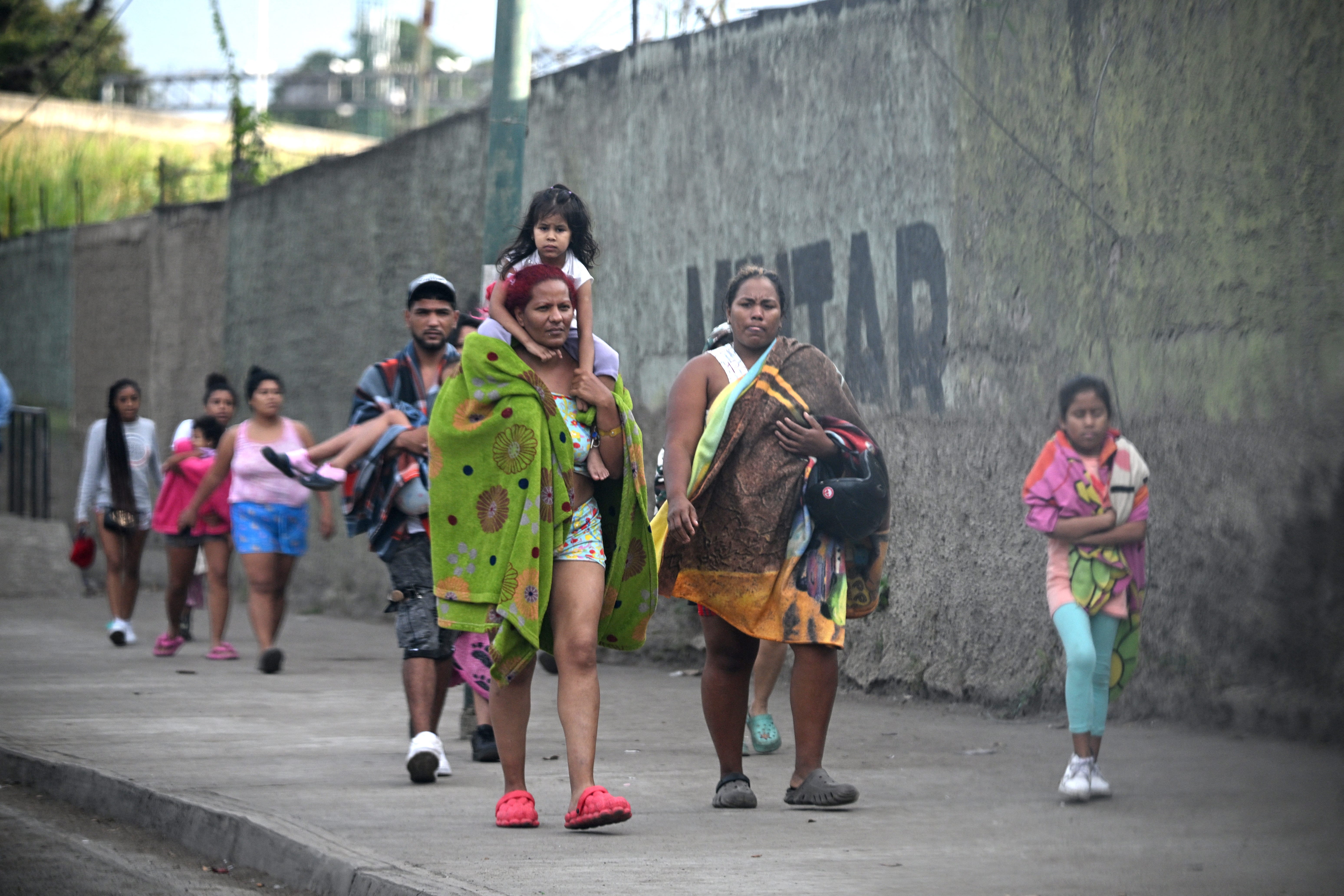
Picture of fire at Fuerte Tiuna, Venezuela's largest military complex, after a series of explosions in Caracas on January 3, 2026. Loud explosions, accompanied by sounds resembling aircraft flyovers, were heard in Caracas around 2:00 am on January 3. Smoke rises from explosions in Caracas, Venezuela, January 3, 2026, in this screen grab obtained from video obtained by Reuters. Fire at Fuerte Tiuna, Venezuela's largest military complex, is seen from a distance after a series of explosions in Caracas on January 3, 2026. Helicopters fly past plumes of smoke rising from explosions, in Caracas, Venezuela, January 3, 2026 in this screen grab obtained from video obtained by Reuters. A column of smoke rises during multiple explosions in the early hours of the morning, in Caracas, Venezuela, January 3, 2026 in this screen grab obtained from video obtained by Reuters. A military personnel member walks past debris at La Carlota military air base, after U.S. President Donald Trump said the U.S. has struck Venezuela and captured its President Nicolas Maduro, in Caracas, Venezuela, Jan. 3, 2026. A destroyed anti-aircraft unit at La Carlota military air base, after U.S. President Donald Trump said the U.S. has struck Venezuela and captured its President Nicolas Maduro, in Caracas, Venezuela, Jan. 3, 2026. Civilians who were living inside Fuerte Tiuna, Venezuela's largest military complex leave the compound, in Caracas on Jan. 3, 2026. A firefighter walks past a destroyed anti-aircraft unit at La Carlota military air base, after U.S. President Donald Trump said the U.S. has struck Venezuela and captured its President Nicolas Maduro, in Caracas, Venezuela, January 3, 2026. Destroyed vehicles at La Carlota military air base, after U.S. President Donald Trump said the U.S. has struck Venezuela and captured its President Nicolas Maduro, in Caracas, Venezuela, January 3, 2026. A member of the National Guard stands guard at Fuerte Tiuna, Venezuela's largest military complex, in Caracas on Jan. 3, 2026, after U.S. forces captured Venezuelan leader Nicolas Maduro after launching a A Colombian soldier stands guard at the border between Venezuela and Colombia, after U.S. President Donald Trump said the U.S. has struck Venezuela and captured its President Nicolas Maduro, in Cucuta, Colombia, January 3, 2026. Colombian police and military personnel stand guard at the border between Venezuela and Colombia, after U.S. President Donald Trump said the U.S. has struck Venezuela and captured its President Nicolas Maduro, in Cucuta, Colombia, January 3, 2026. A destroyed anti-aircraft unit at La Carlota military air base, after U.S. President Donald Trump said the U.S. has struck Venezuela and captured its President Nicolas Maduro, in Caracas, Venezuela, January 3, 2026. A man walks next to military vehicles as Colombian soldiers patrol the border between Venezuela and Colombia, after U.S. President Donald Trump said the U.S. has struck Venezuela and captured its President Nicolas Maduro, in Cucuta, Colombia, January 3, 2026. Passengers sleep on the floor, after flights were delayed and cancelled when the airspace was closed due to U.S. strikes on Venezuela overnight, at Rafael Hernandez International Airport in Aguadilla, Puerto Rico January 3, 2026. U.S. Air Force F-22 Raptor fighter jets sit parked on the tarmac at the former Roosevelt Roads naval base, after U.S. President Donald Trump said the U.S. has struck Venezuela and captured its President Nicolas Maduro and his wife Cilia Flores, in Ceiba, Puerto Rico, January 3, 2026. Colombian soldiers in a military vehicle at the border between Venezuela and Colombia, after U.S. President Donald Trump said the U.S. has struck Venezuela and captured its President Nicolas Maduro, in Cucuta, Colombia, January 3, 2026. A car drives on an empty street, after U.S. President Donald Trump said the U.S. has struck Venezuela and captured its President Nicolas Maduro, in Caracas, Venezuela January 3, 2026. A cyclist stops to check their phone, after U.S. President Donald Trump said the U.S. has struck Venezuela and captured its President Nicolas Maduro, in Caracas, Venezuela January 3, 2026. F-22, C-130 and F-35 aircraft are seen at the former Roosevelt Roads naval base, after U.S. President Donald Trump said on Saturday the U.S. has struck Venezuela and captured its President Nicolas Maduro, in Ceiba, Puerto Rico, January 3, 2026. A supporter of Venezuelan President Nicolas Maduro holds a flag of Venezuela on an empty street near Miraflores Palace, after U.S. President Donald Trump said the U.S. has struck Venezuela and captured President Maduro, in Caracas, Venezuela, January 3, 2026. A person wears a Venezuelan flag, as they and others react to the news after U.S. President Donald Trump said the U.S. has struck Venezuela and captured its President Nicolas Maduro, in Miami, Florida, U.S., January 3, 2026. People react to the news after U.S. President Donald Trump said the U.S. has struck Venezuela and captured its President Nicolas Maduro, on the streets of Miami, Florida, U.S., January 3, 2026. A person wearing a hat that reads A man holds a flag reading

US bombs targets in Venezuela and captures Nicolás Maduro, Trump says

Live updates:US seizes Venezuela's Maduro in 'large scale' attack, Trump says

Why did the US capture Maduro?

President Trumphas challenged the legitimacy ofMaduro's 2024 electionand accused the Venezuelan president of trafficking drugs into the U.S. During the first Trump administration, Maduro and more than a dozen other current and former Venezuelan officials wereindicted by the U.S. in March 2020for drug trafficking charges, announced by then-Attorney General William Barr.

As part of the administration'songoing effortsto prevent drugs from flowing into the U.S.,Trump declared fentanyl as a "weapon of mass destruction"on Dec. 15.

Subsequently, Trump ordered a blockade of ships from entering and leaving Venezuela andthe U.S. seized several oil tankersexiting the country.

Back in September, U.S. military forces begandestroying boats originating from Venezuelabecause the boats allegedly carried drugs destined for the U.S., Trump said.

Speaking to Fox News on Saturday morning, Trump said the action was taken because drugs killed about 300,000 Americans each year. "We don't lose that much in a war," he said. "We are stopping drugs from coming into this country and nobody has been able to do it until we came along," Trump said.

Why is there tension between the US and Venezuela?

The situation is really more of the U.S. exerting pressure to oust Maduro.

Following the first drug boat strikes, Trump said in October that ground strikes in Venezuela could come soon. "We are certainly looking at land now because we've got the sea very well under control,"Trump told reporters Oct. 15.

A socialist and the handpicked successor of the late Hugo Chávez, Maduro has said Washington has plans to take control Venezuela's oil reserves, which are the largest in the world.

Trump said he talked to Maduro a week ago and the Venezuelan leader was attempting to negotiate. "I said 'You have to give up. You have to surrender'," Trump said, speaking on Fox News. "We had to do something that was really much more surgical, much more powerful."

Maduro "is NOT the President of Venezuela and his regime is NOT the legitimate government," Secretary of State Marco Rubioposted on X after the strike. "Maduro is the head of the Cartel de Los Soles, a narco-terror organization which has taken possession of a country. And he is under indictment for pushing drugs into the United States."

Mike Snider is a national trending news reporter for USA TODAY. You can follow him on Threads, Bluesky, X and email him atmikegsnider&@mikegsnider.bsky.social&@mikesnider& msnider@usatoday.com.

This article originally appeared on USA TODAY:US attacks Venezuela, captures Nicolás Maduro. Why was it done?

 

GEAR JRNL © 2015 | Distributed By My Blogger Themes | Designed By Templateism.com